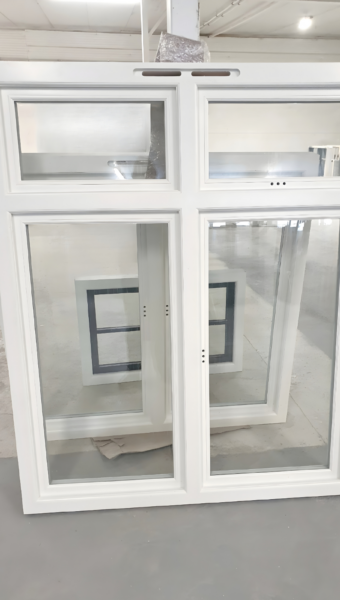
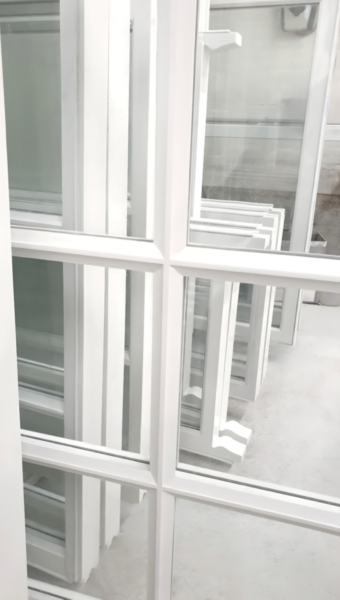
* Product dimensions are specified without divisions.
** Non-standard product dimensions are agreed upon based on individual client needs
OPENING TYPES
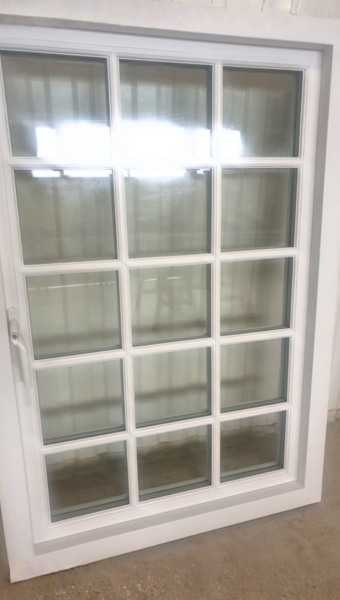
- Fixed
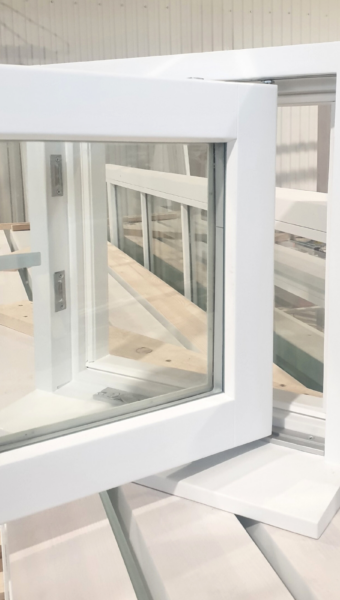
- Outward opening
OPENING MECHANISMS
Opening mechanism - PN Hardware
GLAZING UNITS
Double-chamber glazing unit U = 0.6 W/m2K
Glass construction: 3 panes, 2 of which are coated with a heat-insulating layer. Gaps filled with inert gas
Light transmittance (TL): 69 %
Light reflectance (LR): 15 %
Total solar energy transmittance: 48 %
Single-chamber glazing unit U = 1.1 W/m2K
Glass construction: 2 panes, 1 of which is coated with a heat-insulating layer. Gaps filled with inert gas
Light transmittance (TL): 78 %
Light reflectance (LR): 9 %
Total solar energy transmittance: 53 %
* Glazing unit options (heat-insulating, solar control, fire-resistant, decorative, etc.) are agreed upon based on individual client needs
VENTILATION SYSTEM
- Ventilation via micro-ventilation position in all timber windows with tilt-and-turn function
- Option to mill an air vent into the timber window frame
* Before installing air vents, a heat loss assessment must be performed
SOUND INSULATION
34 (-2;-6) dB
* A special sound-insulating glazing unit can provide up to 50 dB
THERMAL INSULATION
- Elastic and weather-resistant gaskets ensure airtightness
- 3-pane inert gas-filled glazing unit with 2 outer heat-insulating panes
SECURITY
Depending on client needs, windows can be manufactured using tempered glass, and lockable handles can be installed
DESIGN
Colours:
Colour selection from the RAL colour palette or according to the client's provided colour code
Shapes:
Standard or non-standard shapes (arches, trapezoids, etc.) according to individual client needs
TIMBER
Finger-jointed or non-finger-jointed pine, larch, or oak
Only glued timber, timber scantlings are used
Timber scantling moisture content 10-12 %
COATINGS
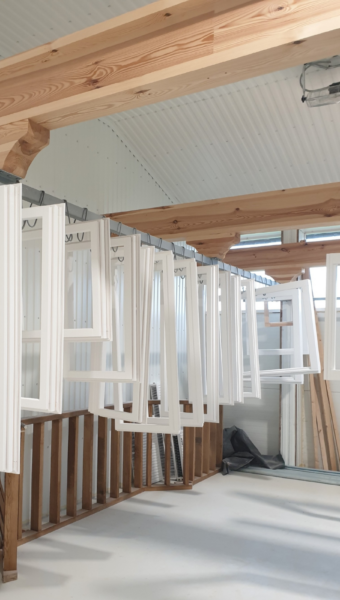
Water-based paints are used, containing fewer volatile organic compounds and heavy metals than required by standards. This ensures safety, durability, and an environmentally friendly choice
MAINTENANCE
Timber products must be treated with a special timber care milk 1–2 times a year. Regular use of the care milk guarantees surface longevity, protects against external influences, renews color, and provides shine